I planned a three day trip with my friend Lyman. “We can’t bicycle up there, it won’t be safe,” I mused. I had read an online bicycle post about somewhere else where rural locals were “rolling coal” on cyclists, adolescents in pickup trucks pulling up alongside and spew diesel smoke and noise, trying to scare them. Would this area north of Baton Rouge LA be like that? Up near the Mississippi border, it seemed somehow dangerous. I realize now I was just harboring the usual prejudice against the rural Deep South.
Louisiana uses the term parish instead of county. I chose a route starting in Clinton LA, the parish seat of East Feliciana Parish, which abuts the Mississippi state line. It’s population has not grown much. The entire parish’s population is 19,000. only slightly larger than the 15,000 it was in the year 1860.

We would be cycling westward towards two notable towns; St. Francisville LA and New Roads LA, one on each side of the Mississippi. This is the bike ride we took over three days.

We drove up from New Orleans with our bicycles in the back of my Ford Escape Hybrid. Coincidentally we both have been riding the same brand: Bike Friday. They have small wheels and do fold but are also excellent general touring bicycles. We parked in front of the circa 1840’s courthouse in Clinton LA (population 1,500) on a beautiful spring day. The smothering heat of summer had not yet arrived.
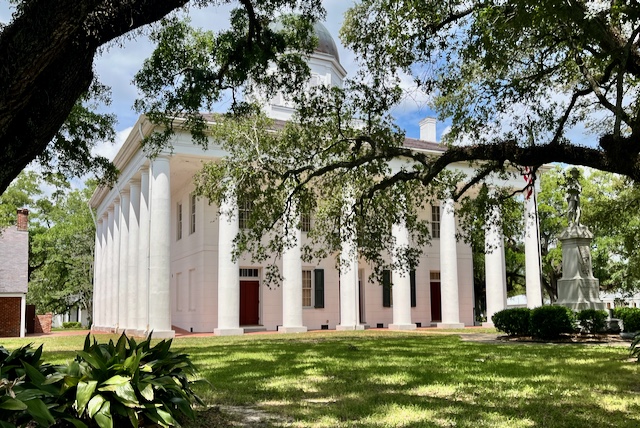
I get antsy on these trips. I want to keep cycling and always seem to be waiting on Lyman. I paced back and forth while he assembled his bike. I looked around for somewhere to pee. Much of Lyman’s career as an architect was supervising the renovation of small courthouses in Texas. This has made him comfortable hanging around police and the legal system. He told me that courthouse interiors are and should be a public space. I am (I guess) not against Law and Order but I find the legal process depressing and intimidating. I reluctantly walked in through the metal detector. The only other people I saw were a sheriff at the door and two poor-looking elderly people who I overheard talking in a low voice.
“They are talking five to twenty years.”
The men’s room was the first door on the left. I was glad to get in and get out.
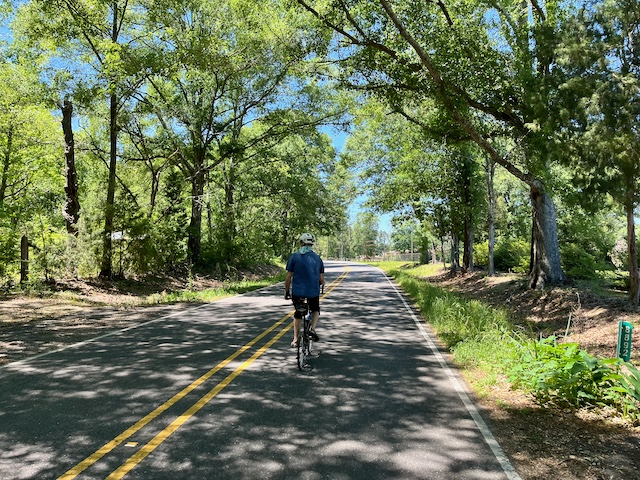
At about eleven in the morning we loaded up the bicycles and headed out for a three day ride. Our first destination was twenty-six miles west to St. Francisville. In this remote area the wide two lane LA-10 felt like a superhighway. We were glad after two or three miles to be able to bicycle on smaller roads. I do not know what I had been worrying about. Cycling on this nearly empty country road was delightful.
About halfway through the ride we passed through Jackson LA (population 3,800), home of a major state mental hospital. Lyman wanted to see what the main building looked like and to bicycle around the compound. The guy at the gate would not let him in.
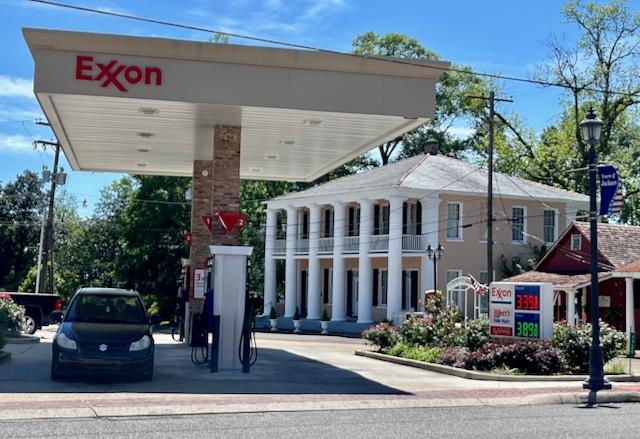
Jackson seemed a more prosperous town than I had expected. It appears to benefit from its proximity to Baton Rouge. A gas station sat next to some historic building.
We cycled onward through small roads on the hilly upland towards St. Francisville.

There were other signs of exurban Baton Rouge prosperity, even though the state capitol is over thirty miles away. Near St. Francisville there was a new subdivision going up. For the last two miles into St. Francisville we had to cycle on the big four lane highway Route 61 which thankfully has a wide shoulder.
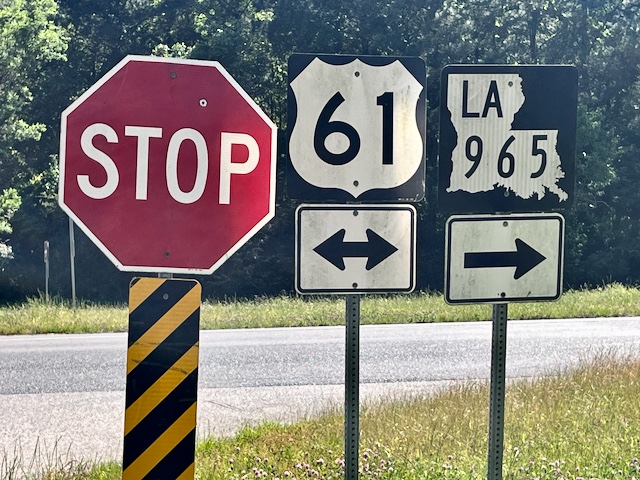
US highway 61 runs north – south from New Orleans to Minnesota, passing through much of the blues country of the Mississippi Delta. Robert Johnson’s Crossroads were supposedly on this highway. Blues singer Bessie Smith died in a 1937 car wreck on 61 in Mississippi. According to Wikipedia, seven thousand miles away in New Zealand and Australia, the most feared genuinely criminal motorcycle gang is called Highway 61. Huey Long had the Louisiana portion of 61 south of Baton Rouge built as his Airline Highway, so he could more quickly drive to New Orleans for his Ramos gin fizzes. It was not until this trip that I realized that Bob Dylan grew up around the northern terminus of Highway 61 near Duluth MN. It must have been inspiring to Dylan, thinking of the romantic far away places the highway could lead him to.
God said to Abraham, “Kill me a son”
Abe said, “Man, you must be puttin’ me on”
God said, “No”, Abe said, “What?”
God said, “You can do what you want Abe, but
The next time you see me comin’ you better run
Abe said where you want this killing done
God said out on Highway 61
(courtesy Bob Dylan)
The east bank of the Mississippi River north of Baton Rouge is upland country, the southernmost hills of Louisiana. The town of St. Francisville sits high on a bluff about a mile from that river. Until this trip I had not known that this river stretch has been a boundary between the historically Protestant northern Louisiana and the Catholic southern Louisiana. We were to learn the next day that there had been actual battles between the Protestant English and the Catholic French/Spanish near here during the American Revolution. Even before knowing this factoid I had noticed that St. Francisville seemed a little buttoned up. I conjecture that it serves today as a clean and neat suburb for Baton Rouge, thirty miles south.
Befitting a Protestant place, we had trouble finding a bar open at 4:30 PM on Monday afternoon. We eventually did find the bar section of a Middle Eastern restaurant. We parked the bikes outside.
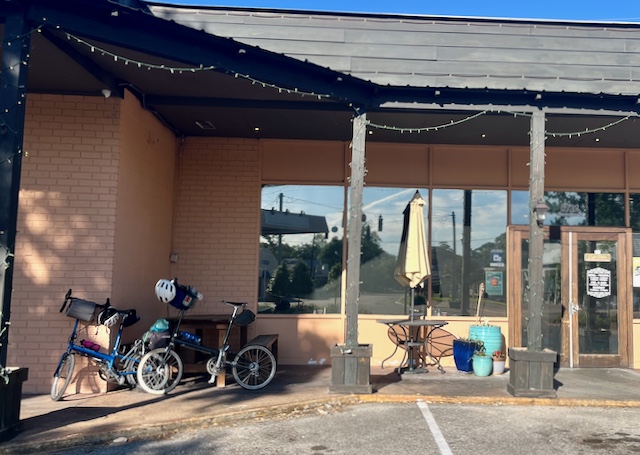
We were the only customers until a middle aged White guy came in to pick up his takeout. He felt inspired to drink beer with us and almost immediately launched into his disjointed life story, including bouts with cancer and his career in the jewelry business.
Looking for lodging on my phone I noticed a group of 1930-40’s looking motel units laying catty-cornered about a hundred yards of our bar. We found a listing on Airbnb but also a small outdoor sign. I called the number and arranged for two of these little houses. They were very nice on the inside. My biggest beef was that their windows are sealed shut.

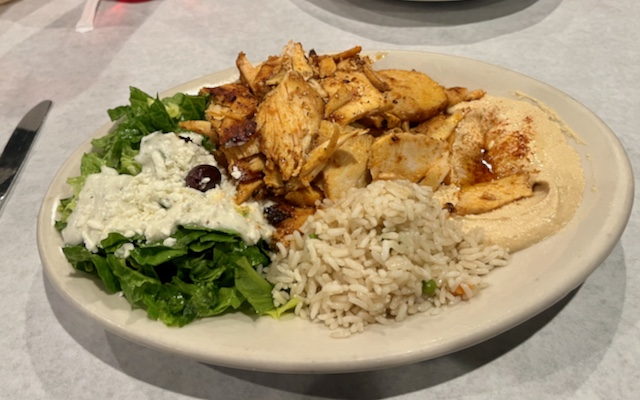
Middle Eastern food is among my favorites, and we walked back to “our” restaurant for dinner. Both the chicken and the shrimp entrees happily came with sides of rice and hummus.

The next morning we discovered that there was a local coffee house about thirty yards from our motel.


Right outside the coffee shop was a McLaren coupe; a car that new costs over three hundred thousand dollars. A guy walking out of the building said he knew the owner. He said the guy usually just drove it back and forth St Francisville and The Bluffs; a distance of about ten miles.

It was time to resume bicycling! Our day’s destination would be New Roads LA, only eighteen miles away but we planned a longer route to do more sightseeing. We first had to cycle on a section of four lane US-61, then rejoin LA-10 as it crossed the Mississippi River.
Outside of St. Francisville there were newer subdivisions done in the ubiquitous Louisiana mansard roof style.

The immediate plan was to cycle along US-61 a few miles to LA-10 to then head over the Mississippi River on the relatively new (2011) Audubon Bridge. The approach to the bridge on both highways had wide shoulders to bicycle on, a rare instance in both the South and Louisiana. The best photo I found of that bridge was on a wall in New Roads later that day.

The bridge has little traffic, connecting lightly populated areas on both sides

We got off our bicycles and stood in the middle of the river for quite a while, taking in the view and watching barge traffic pass underneath.

The terrain we had cycled on the East Bank had been upland hills. The West Bank felt like a different universe, a flat floodplain spreading into infinity. This must be the beginning of The Delta we have all heard about, which is mostly in the state of Mississippi.
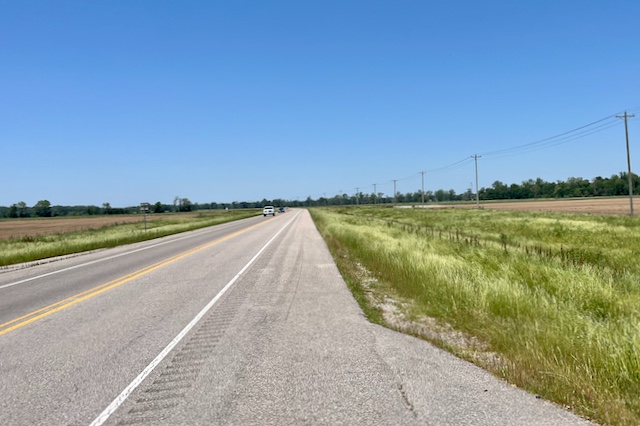
We cycled a few miles upstream towards Morganza LA along a pocked rural road, the mighty Mississippi unseen on the other side of a tall level on the right. In this lightly populated area we passed several historic churches and plantation-looking buildings, all sitting by themselves on the flatness lining the river.
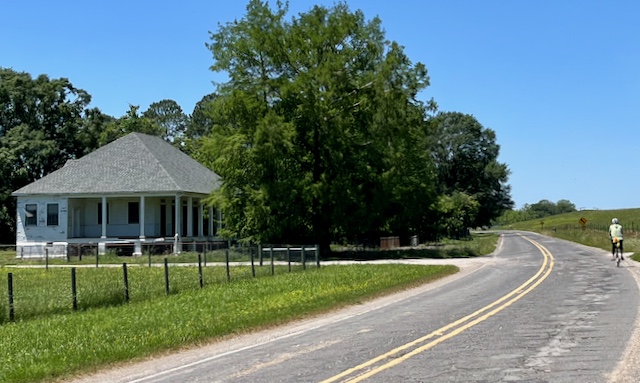

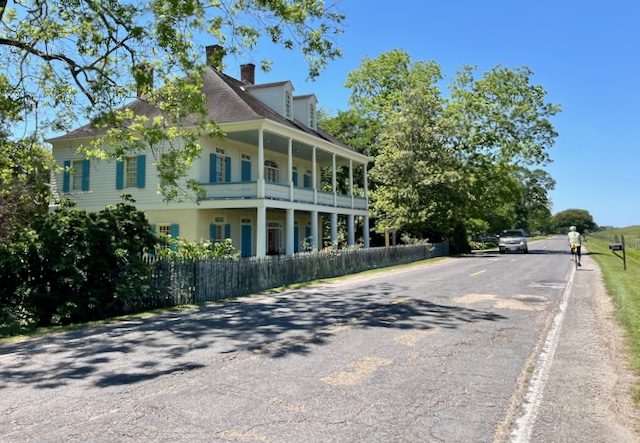
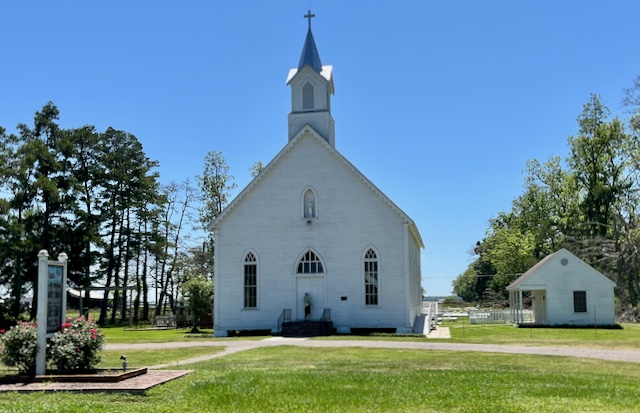
I wanted keep cycling but Lyman insisted we stop and examine a huge live oak growing on the edge of the highway.
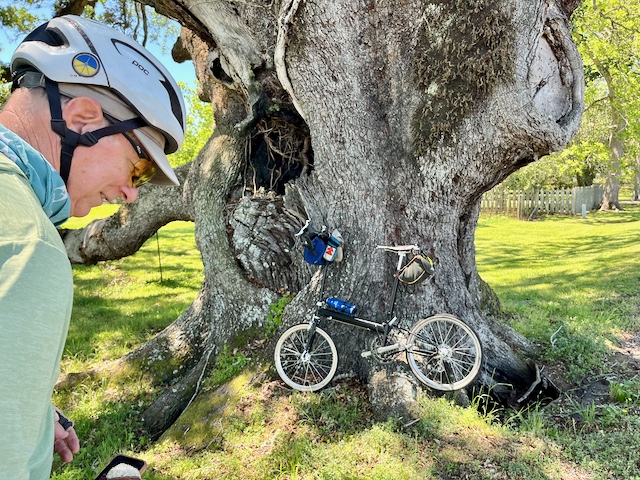
On this Pointe Coupee Parish road alongside the river there were lovely views and little car traffic. We needed but did not have fat mountain bike tires. The road was so bumpy that cycling was thoroughly unpleasant. We decided to turn around and head back towards the town of New Roads LA (population 4,900.) We passed through communities of mobile homes and small houses.
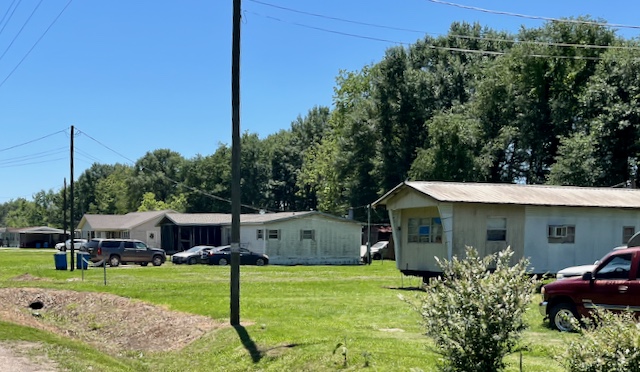
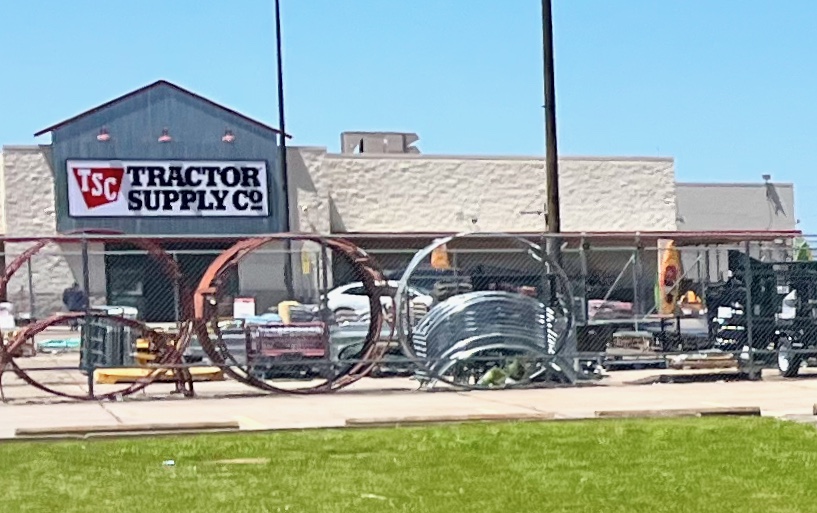
The outskirts of New Roads reminded me that we were still in America, with about two miles of gas stations and chain stores.
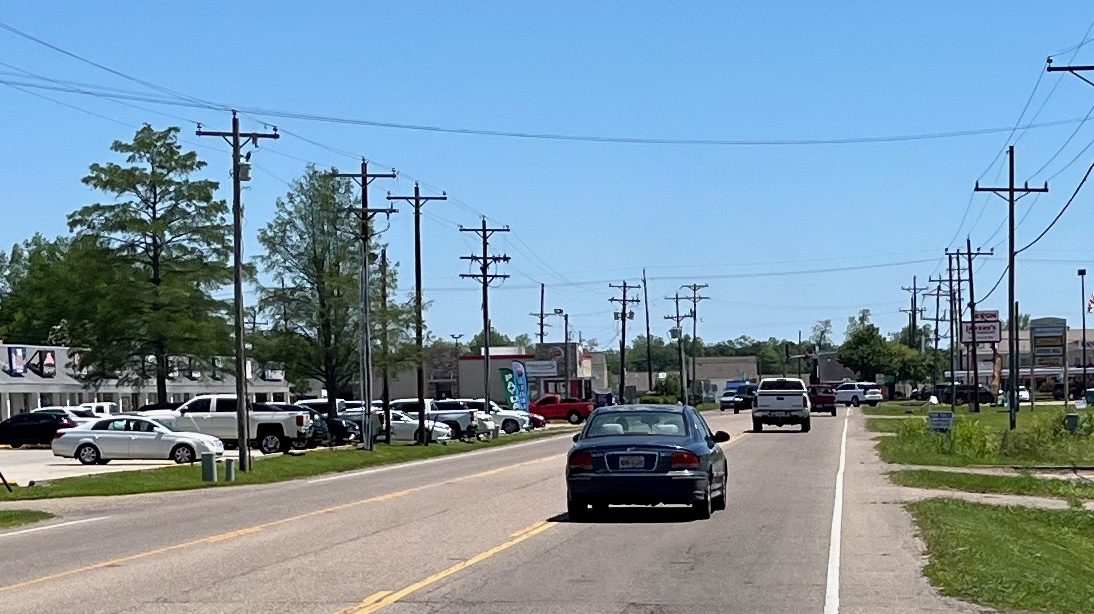
We passed a Tractor Supply store which sell many different kinds of stuff. They are all over America but conspicuously only in “rural” areas, towns that most of us would define as Red America. There are no Tractor Supply stores in either New Orleans or Chapel Hill/Raleigh/Durham NC.
We finally arrived in the small downtown of New Roads LA. Lyman was excited about going to the courthouse and to check out the history in this area of his last name Labry. His genealogical research was not my first priority but I went along for the ride. He already knew that the Labrys had had some kind of plantation or farm near New Roads before the Civil War and that the whole family had left and moved to New Orleans by 1895 or so.
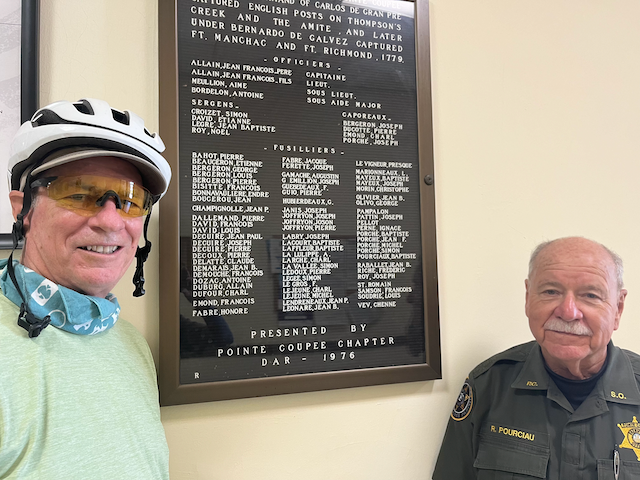
There is a plaque on the courthouse wall listing the French surnamed officers and enlisted men who fought for the Spanish against the British here in 1779, a situation where the Spanish/ French were now on the same side as the Americans a thousand miles to the northeast. The deputy here is seventy-nine years old and both his and Lyman’s last names were in the list of French surnamed “fusiliers” (soldiers) in that conflict.
The officer told Lyman he should seek out a guy Brian Costello, a local genealogy expert that he said was usually available at the library. Lyman wouldn’t quit plumbing his roots. We bicycled over to the Pointe Coupee Public Library where Lyman actually found the man. They talked for over an hour. The guy, in his head, knew all about Lyman’s nineteenth century Labry family. Meanwhile, I the absorbed more general world news in another room, reading the library’s paper New York Times..
My Chapel Hill NC readers will want to know that my quintessential Chapelhillian friend Susan “Soup” Prothro Worley’s father grew up here in New Roads LA, of all places. Soup said her father’s family “only” arrived here about 1932 as outsiders and Protestants in a sea of Catholics. Soup said her father had been captivated by the local culture. He graduated the public high school here as valedictorian and local basketball star in about 1940 but then moved away when he went to LSU. We did not run into anyone who remembered his family.
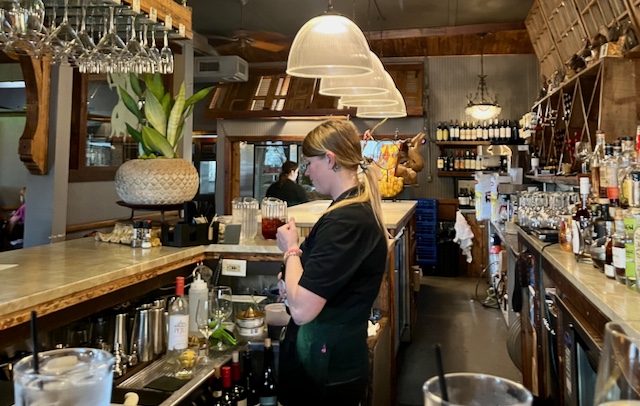
I found a modern two bedroom townhouse being rented as an Airbnb. We later cycled downtown for dinner. The number of actual restaurants in New Roads LA is in the single digits. The fanciest and most often reviewed is Ma Mama’s Kitchen where we found seats at the bar. Each of us ordered two appetizers; my most delicious looked like gumbo but was called “crawfish bisque with stuffed crawfish shells.” Our bartender lived on the other side of the river and drove every day over the Mississippi on the Audubon bridge. She envied that we had been able to walk around on the center of that bridge, on that wide shoulder, gazing down over the river. She said she had always wished she could do that, as there is no place to stop a car on the bridge. Bicycles do sometimes give us a special kind of mobility.
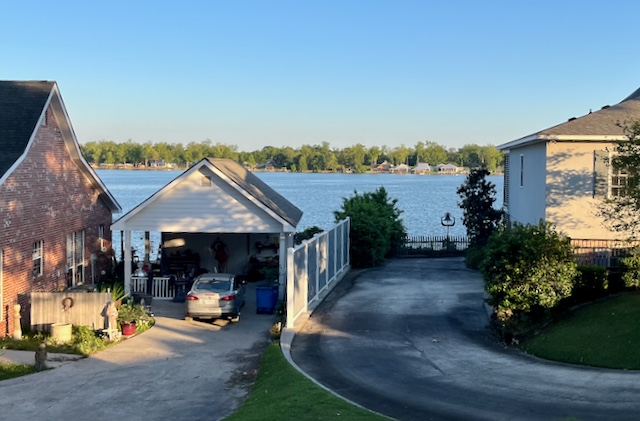
The next morning we were to cycle forty something miles back to our car parked in Clinton LA. Cycling out of New Roads LA I saw again its unique topography, fronting False River, which is actually a lake.

Until about the year 1725 the Mississippi flowed alongside the site of the town of New Roads. Maybe because of a log jam the river was briefly naturally dammed and forced to alter its course. As water does it sought the shortest route, creating a new path bypassing New Roads, leaving behind what is now called False River. Today that might be is a good thing. The Mississippi River near here is powerful and stormy and brown, not conducive to swimming or water skiing or sailing or pleasure seeking of any kind. New Roads fronts False River which is much more idyllic looking, better for all of those leisure activities. Because it is a lake it does not have levees that block the view.

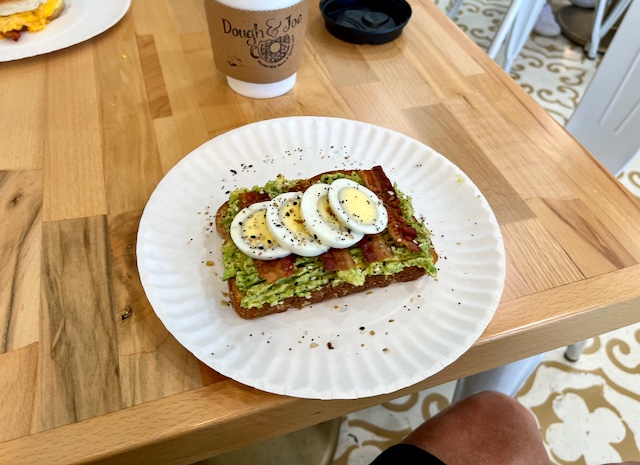
Near downtown we sought out breakfast at the local coffeehouse Dough & Joe.

I had never had egg and bacon on my avocado toast before. Theirs was spot on.
I was, as usual, in a rush to leave and start cycling but Lyman, in hindsight, correctly insisted we linger. We talked and talked with some older locals who likely come here almost every day. The woman knew everybody in town and filled in Lyman on his genealogy questions. She told us about her family. The guy in the blue cap now lived in New Roads but had resided in New Orleans’ Lower Ninth Ward until 2005’s Katrina. He still spends every Mardi Gras Day in a certain outrageous costume in downtown New Orleans at the corner of St Charles and Common. The Black guy had colorful stories from years past. He said that back in the day he was the driver of a gold Rolls Royce with tinted windows for a state senator. He told about being pulled over by the police and being racially harassed, told skillfully in a way that made the stories funny and non-political and without making the rest of us uncomfortable.
They all said they loved New Roads and commented that St. Francisville across the river was a nice place, but no fun.

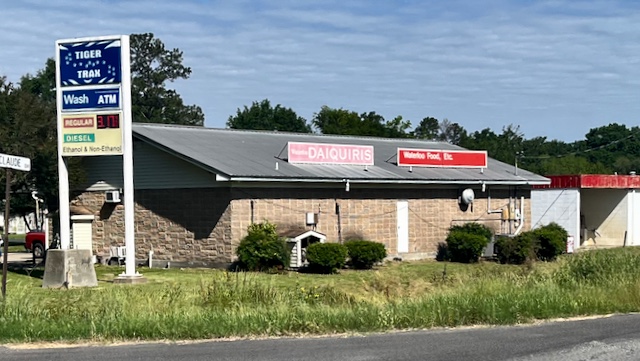
Lyman and I still had about forty miles to go. We cycled out of town back towards the Audubon Bridge, taking a different route from the day before. Those who have not lived in Louisiana might seem shocked that a rural gas station would serve frozen daquiris “to go.”
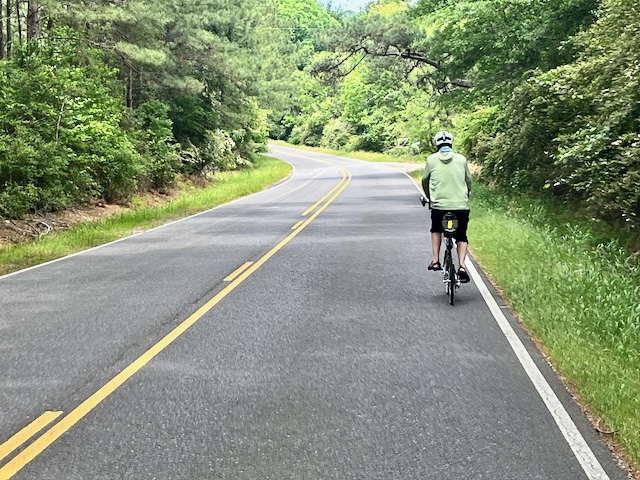
From that gas station it was only a few miles up and over the Mississippi on the Audubon Bridge. We then cycled briefly on fabled US-61 before turning onto more lightly traveled side roads. In the forty mile ride from New Roads to Clinton we essentially did not pass through any real towns. The weather was again perfect with temperatures in the seventies and low humidity as we cycled on woodsy backroads.
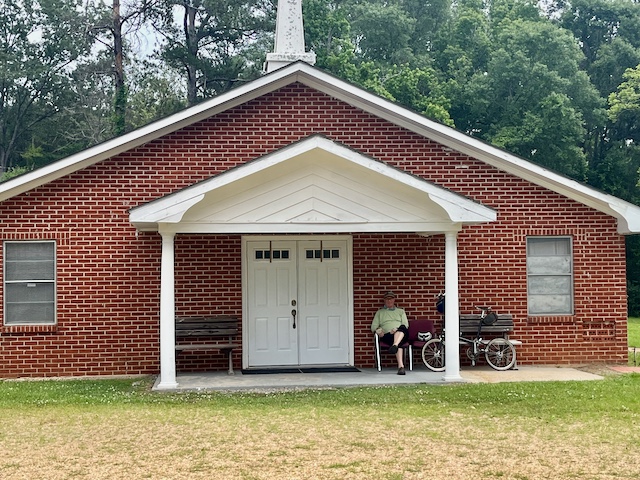
Eight miles from our destination this church sufficed as a place to take a breather.
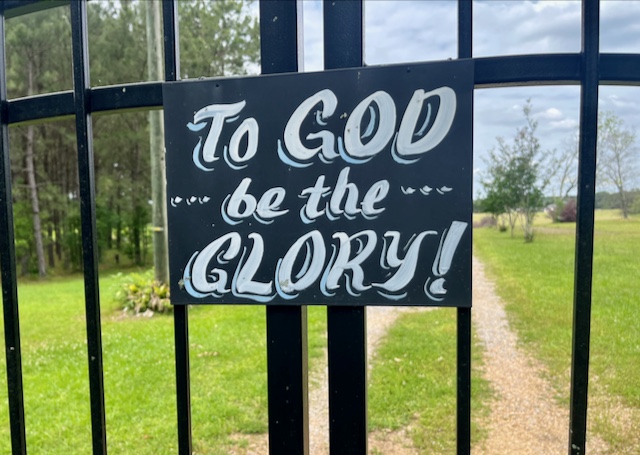
In the middle of nowhere we passed a patriotic fence.


We later on arrived at the courthouse square in Clinton LA. My car was still there.

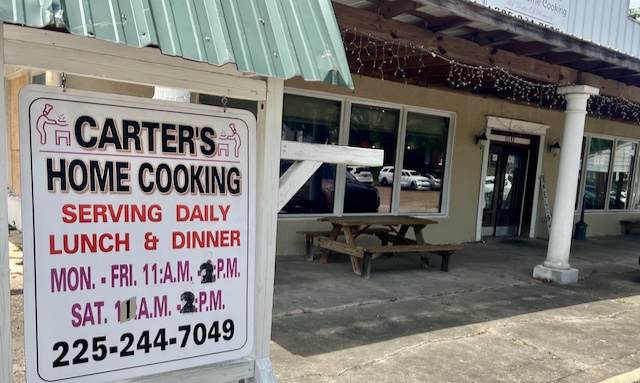
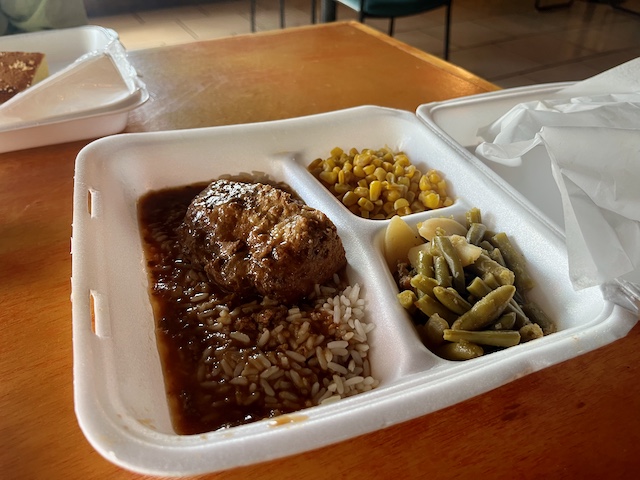
Across the street was Carter’s, likely the only restaurant in Clinton LA and scheduled to close in fifteen minutes at 2:00 PM. We hurried inside. All their meals are from a steam table, choice of either meat loaf or liver and onions, plus three sides and cornbread. Everything is served on styrofoam with plastic utensils. The food might have been good at noon but by 1:50 PM the meat was overcooked.

After lunch we loaded everything in the car and drove back to New Orleans. Along the freeway in Hammond LA there is a PJ’s. I pulled over to get a coffee for the road, oat milk latte with one pack sugar.


 urban bicycle journeys
Leave a comment