There is no exact point where the Mississippi River empties into the Gulf of Mexico. Eighty miles south of New Orleans the river has almost reached the Gulf when the highway ends in Venice LA, on the bottom right of the Google map below. Beyond Venice there are just smidgeons of land, accessible only by boat. The fast flowing fresh water from the river slowly mixes with the salt water of the Gulf. The map also underscores the amount of land Louisiana has lost in recent decades.

I had cycled to Venice once before, a long time ago. In 1985 Tootie was out of town and I was bored. I propositioned my friend Connie: if I bicycled all the way to Venice would he come pick me up?
One morning forty years ago I biked from my Uptown New Orleans apartment to the downtown Algiers ferry to cross the river to the West Bank. I then cycled eighty miles south, all in one day. I do not remember the ride feeling particularly dangerous.
No one had cell phones. About six at night I arrived in Venice LA and called Connie from a pay phone. He and E, his lovely Spanish girlfriend, drove down in his tiny 1974 Datsun pickup truck. We put my bicycle in the back and drove home sitting three across the cab. She soon became his wife, which she still is. I guess I paid for the gas.
Fast forward to 2025 I was ready to try this again. Strong winds were predicted from the southeast. Cycling FROM Venice back to New Orleans would make much more sense. I discovered that an Uber all the way to Venice cost under a hundred dollars.
I now had no interest in cycling all those eighty something miles in one day. There are almost no motels down there but online I found a plantation house bed and breakfast with some kind of restaurant at the almost exact halfway point. I made a reservation without knowing further details.
I would use my folding Bike Friday. On a random Thursday morning I Ubered for a ride and she showed up in less than fifteen minutes in a Toyota Rav 4. I folded my bicycle and loaded it into the trunk. I have trouble making small talk and my driver politely did not push that we have an extended conversation. I did ask if she was Latina, as she listening to Spanish language music the whole time. She replied.
“Si, soy Dominicana.”
We didn’t talk too much during the hour and a half ride but our mutual vibe was chill. After miles of suburban sprawl we were driving through the emptiness of lower Plaquemines Parish, feeling like we were driving to the Moon, or even to Mars. My driver commented she had never been down here before and I explained the geography.
I had nothing else to do but watch the speedometer. Her car had been hovering around the speed limit of sixty. As we passed a Plaquemines Parish Sheriff Department vehicle, he did a u-turn and turned on his lights. My Black and Hispanic Uber driver pulled over.
“Ma’am we have clocked you at seventy-three in a fifty-five mile an hour zone.”
He paused. He did not ask why I was in the back seat.
“Ma’am, you will have to be more careful in the future.”
He had let her off without a ticket, although I am certain she was never speeding. I admit I am scared of the police. I can only speculate as to the cop’s motives but being stopped certainly left both the Uber driver and me feeling disheveled and vaguely threatened.
I felt mildly guilty leaving her alone down here in lower Plaquemines Parish. She drove off as I unfolded the bicycle near Changes Restaurant in Venice, about a hundred yards before the end of State Route 23.
I first cycled about a quarter of a mile further south, where the road splits into several dead ends, each into some kind of port or industrial complex, as the Mississippi gradually devolved into the Gulf of Mexico.
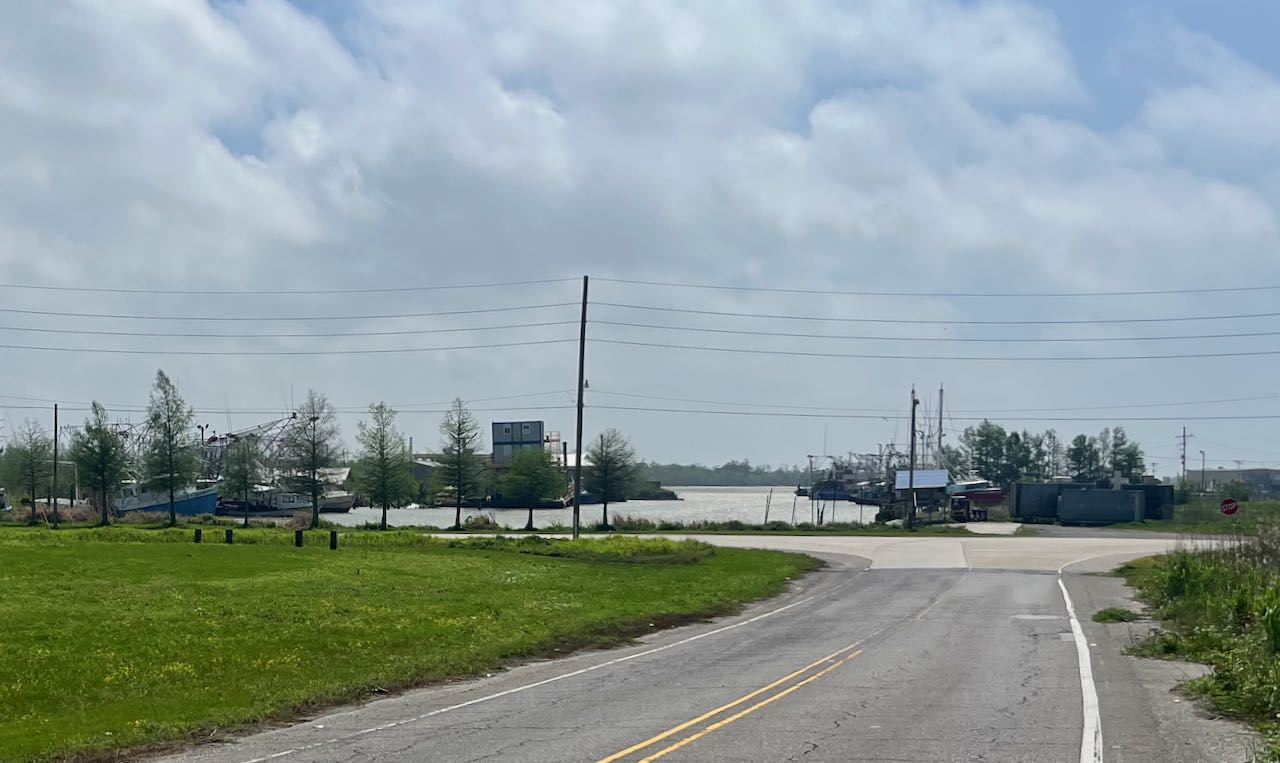
Pilots are locals who steer the mostly foreign flag ocean going vessels up and down the Mississippi. They are a highly paid and well connected group. I cycled by their big new facility, up on stilts.,

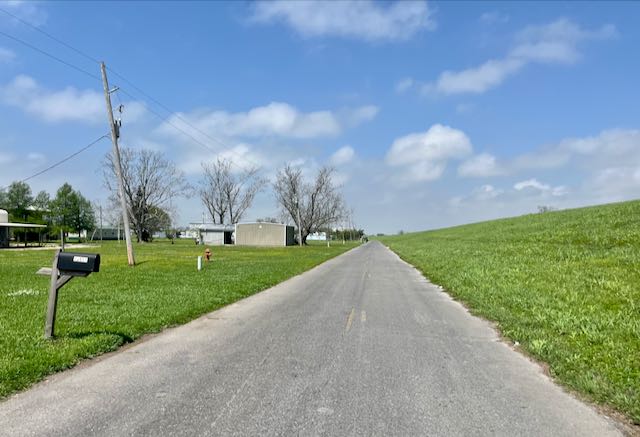
For the first twenty-something miles the cycling was excellent. I could stay off the big highway LA-23. First, I rode on the top of the Mississippi levee.

While the view was attractive the surface was not, and it would take me forever to cycle to New Orleans on such a cratered surface., . I soon was able to switch to the parallel “old road” where a car would pass only every ten minutes or so.
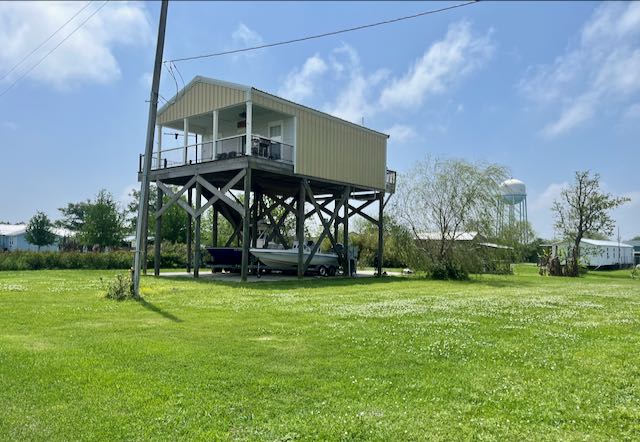
Essentially every residential building was a trailer, or was built on stilts.
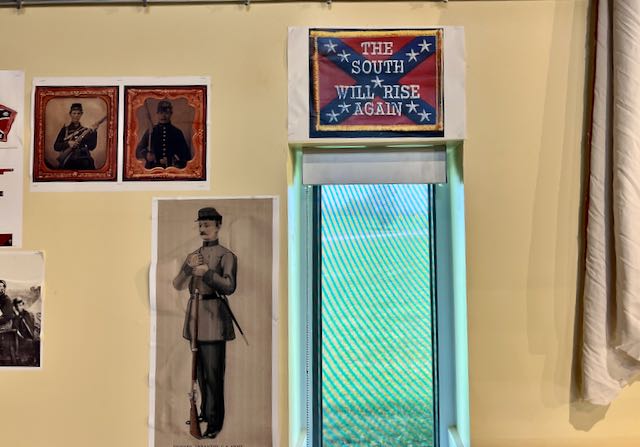
Nine miles north of Venice are the ruins of Fort Jackson, built 1825-32 by the Federal government to guard the entrance to the Mississippi River; low brick walls with guns to fire on invading vessels. After secession the Confederates held it 1861-62 but it soon fell to the Union. It was abandoned as obsolete by the Federal government in 1927. I skipped visiting the fort. There is a separate Fort Jackson Museum operated by Plaquemines Parish. I visited it mostly because it looked to be a convenient rest room. I was the only visitor, and the employee there barely looked up from her desk. The museum seemed to focus on the Confederate cause.

The South Will Rise Again
I cycled northward on the old road, Highway Eleven. It all felt quite safe as there was no traffic.
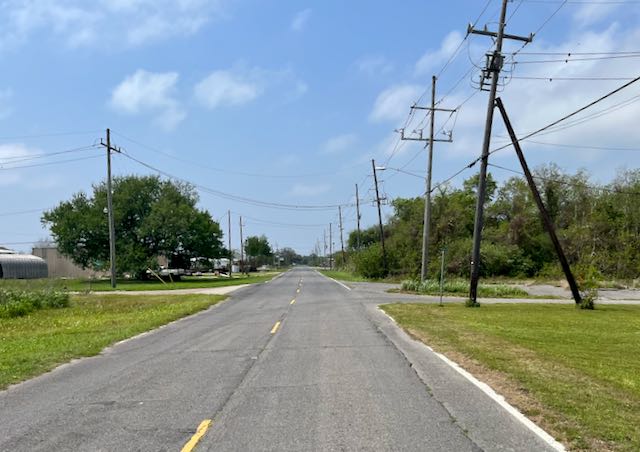
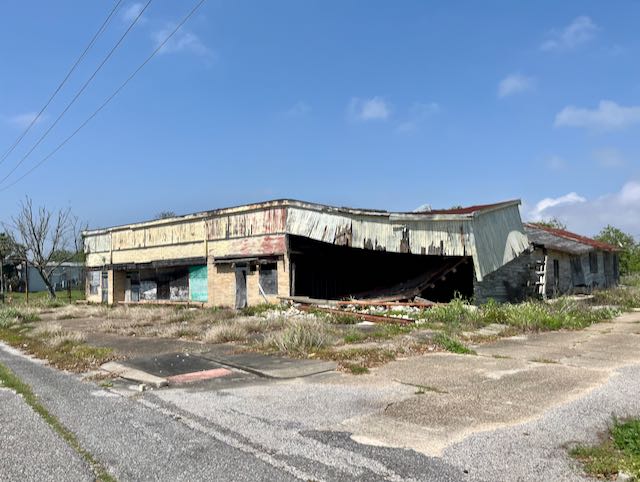
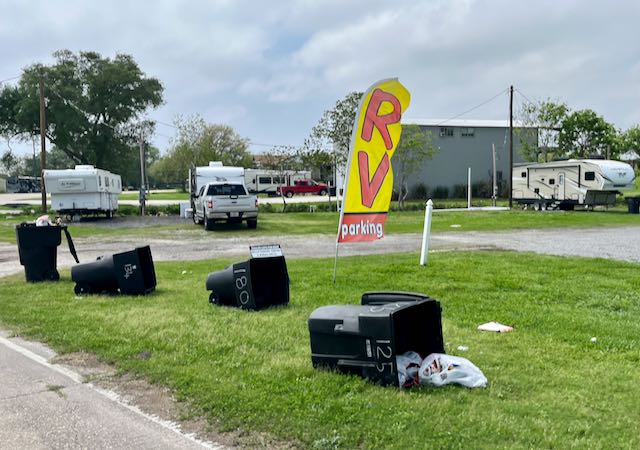
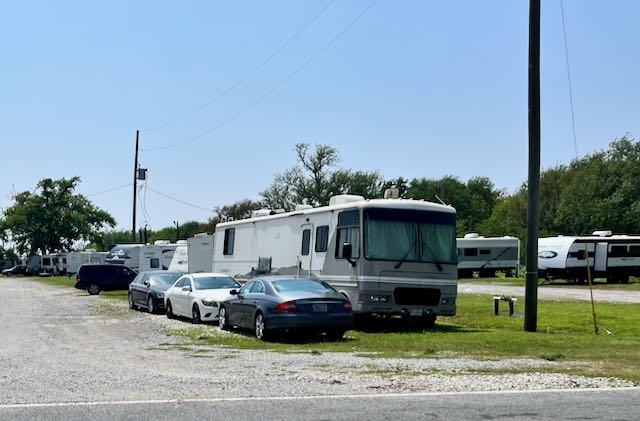
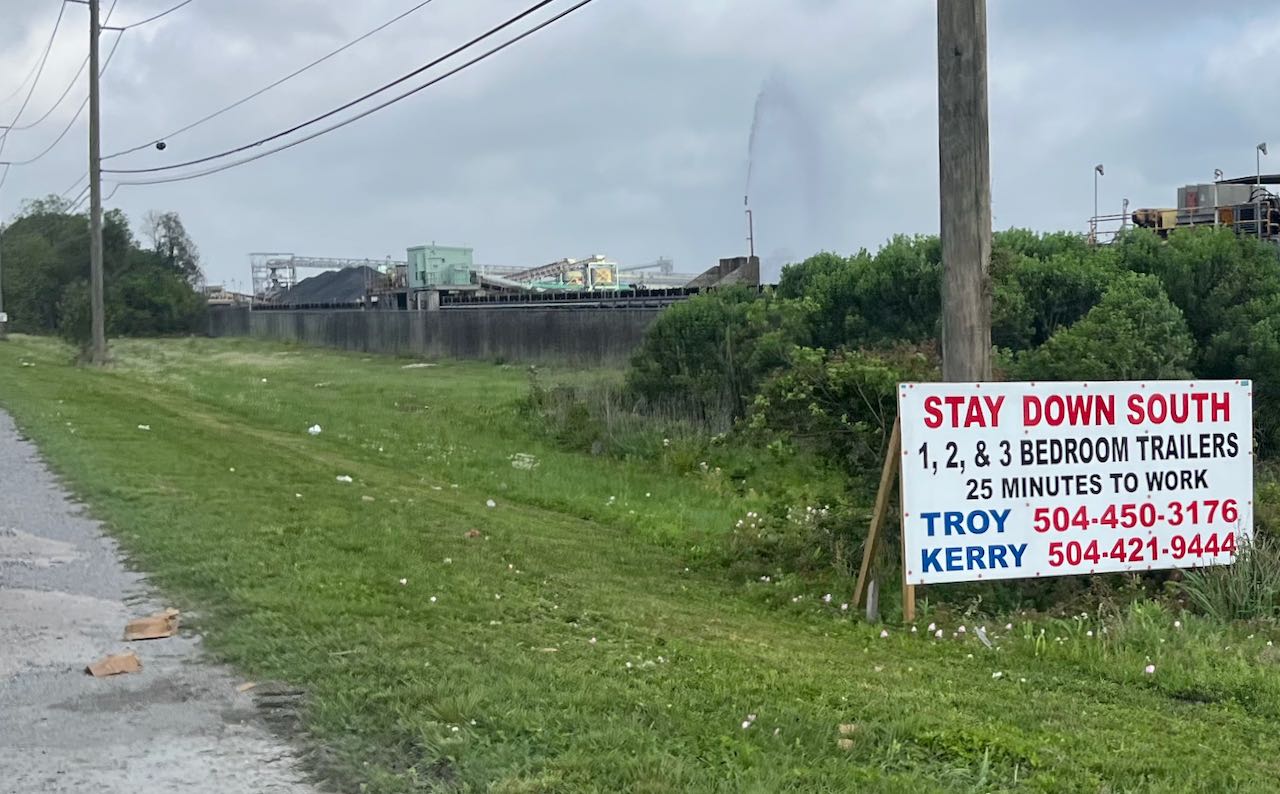
I had cycled several hours before I realized that almost every building in southern Plaquemines Parish is less than about twenty years old. Just about everything must have been flooded by either Katrina in 2005 or Ida in 2021. The few older houses stood out because they were so rare. There were many many RV’s and trailers., I was to learn that a lot of the trailers are occupied by temporary workers at the giant LPG complex under construction much farther north.


Around Port Sulphur there was a stretch where I had to cycle on the big highway. At least the road had a wide shoulder. A plethora of road signs announced a farm-stand where I stopped, looking for a Gatorade.
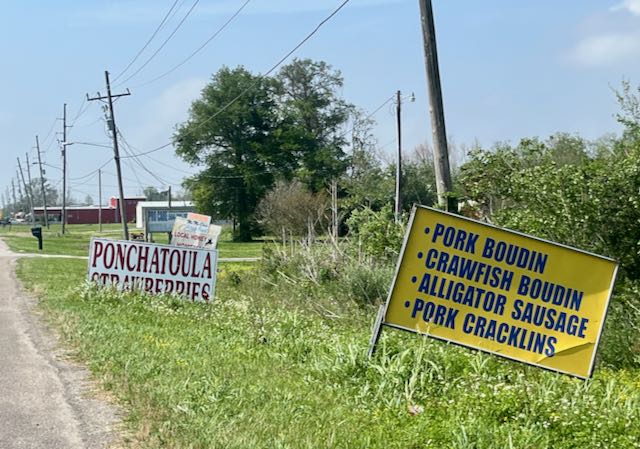

There were three older women sitting around a table, as if they had been there a while. They had only a limited selection of cold drinks and directed me to a gas station half a mile up the road. One of them asked:
“Are you with that guy who was killed yesterday?”
This was the first I had heard of this. Apparently a bicyclist had been run over the day before right in this general area. I had not seen any other bicyclists. I would learn more facts later. I continued cycling north. The safer route on this stretch was back on the levee.
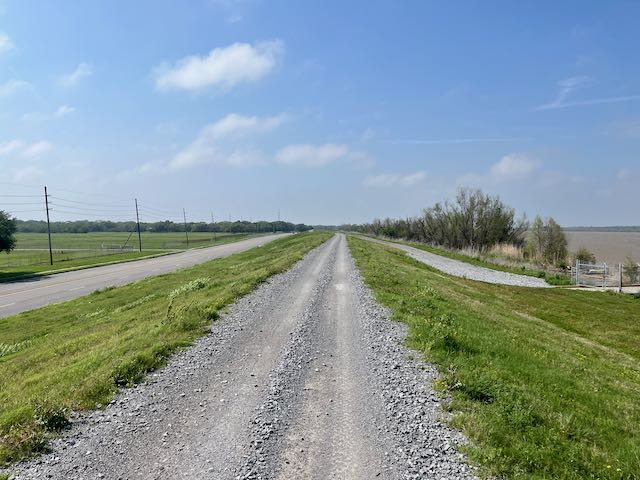
I was getting close to my lodging but the last few miles were on the shoulder of big LA-23. There was not much traffic.

The bed & breakfast Woodland Plantation sits by itself in the swampy landscape, fronting the Mississippi River but the view blocked by the levee.
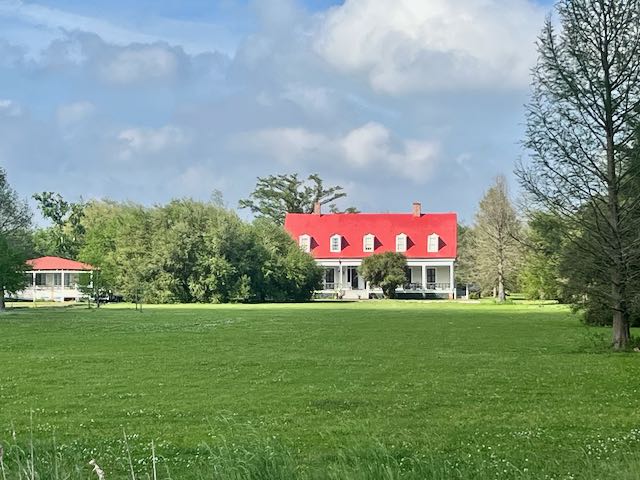

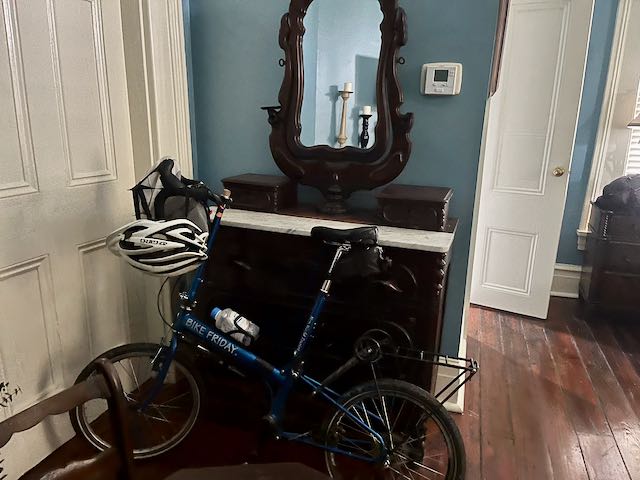
The Big House was built in 1855. I checked into my room there, bringing my bicycle inside.
Small hotels with an adjoining quality restaurant are precious and rare in America. Fifty yards from my room Woodland had converted a church sanctuary into a restaurant. At 6:00 PM I sat down at the bar for a glass of New Zealand Sauvignon Blanc.

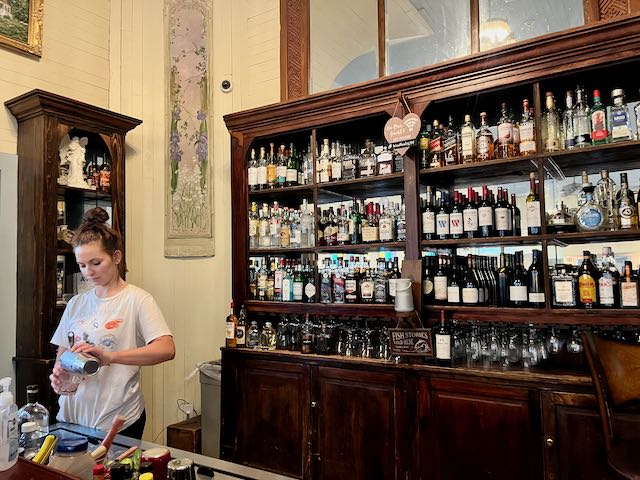
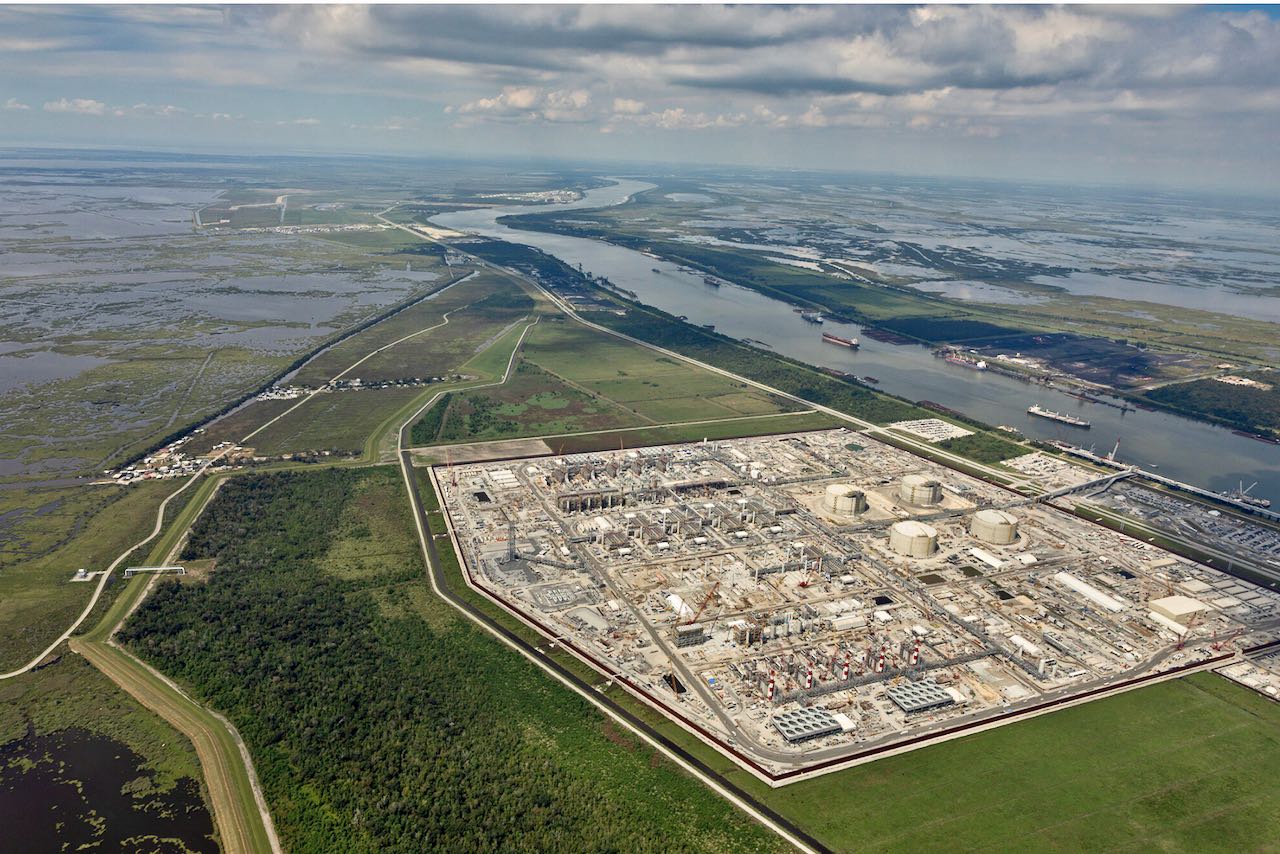
There was conversation! The only other guy at the bar was an engineer from Gettysburg, Pennsylvania who had been living down here for a year, mostly at this bed & breakfast. I told him I was cycling north. He said I would be passing through what he claimed is the largest construction project underway in the United States right now, a Venture Global liquid natural gas liquefaction terminal. While being built he said it employs six thousand, to be reduced to five hundred after going on line.
He went off to join a work colleague for dinner but I chose to stay at the bar. I was pleasantly surprised that this restaurant is really high end. The Pennsylvania guy eats here almost every night and he counseled, correctly, that dinner was a fixed price, so I should order “everything.”
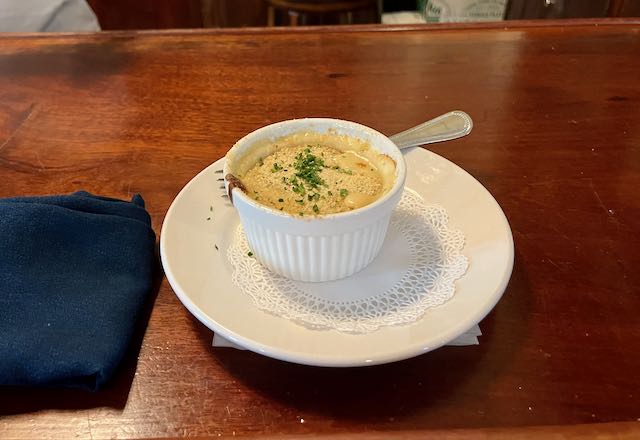
First course was crabmeat au gratin.
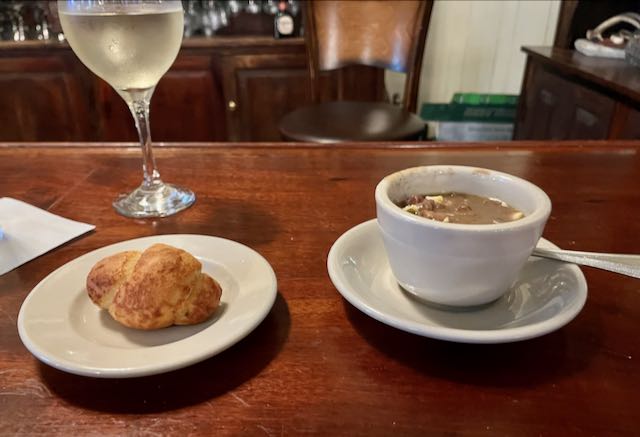
Next was turtle soup, with big chunks of meat.
Another course! Caesar salad.

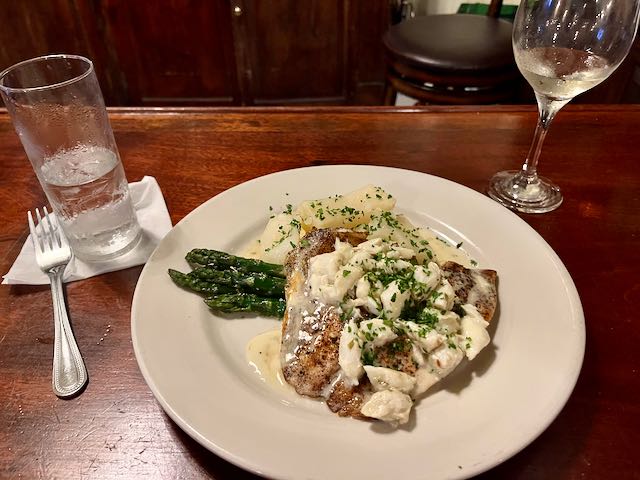
There was a choice of three main courses including a delicious sounding steak but I chose pompano with lump crab. Amazing.
I skipped dessert. The Pennsylvania guy came back to the bar for an after dinner drink. Foster, the owner of all this, joined the conversation and he exuded hospitality. He was drinking Grand Marnier and he compted me a little taste in my empty wine glass. He told us his chef is Kevin Vizard, formerly of the restaurant Vizard’s at 5015 Magazine Street, New Orleans.
They asked about my trip. I was not the first cyclist to stay at Woodland Plantation but one of very few. Most guests come for fishing. We had an intense discussion of that bicyclist being killed the day before out on the highway. I would have to be careful, they both opined.
Several days later, after returning to New Orleans, I learned that on that same night my friend Stan, husband of Roz from our pickle ball group, had read about the cyclist being killed. Stan and Roz live in northern Plaquemines Parish and both knew I was cycling out here. That cyclist was an experienced rider, seventy-two years old, from Cornelius NC, a prosperous Charlotte suburb. He had been wearing brightly colored clothing and his bike had a flashing red light. When Stan saw in the news that a North Carolina cyclist had been killed out here he feared the worst. It took him about ten minutes of frantic online searching to confirm the guy was someone other than me.
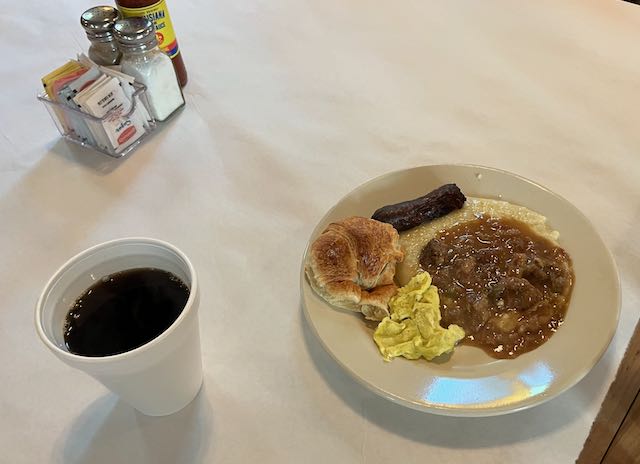
I still had to cycle the rest of the way. Before heading out the next morning, there was breakfast featuring grillades and grits.
Much of the bicycling this day was on LA-23 which usually has a seemingly safe wide shoulder, likely similar to the stretch where the guy had been killed. It appears he had for some reason veered into the high speed travel lane and was hit from behind by a truck.

I soon passed through the huge LNG plant. Below is an aerial photo I found online. Alongside is the Mississippi River and oceangoing vessels. Outside the levee, at a lower water table, are Louisiana wetlands. New Orleans is somewhere at the top in the distance.
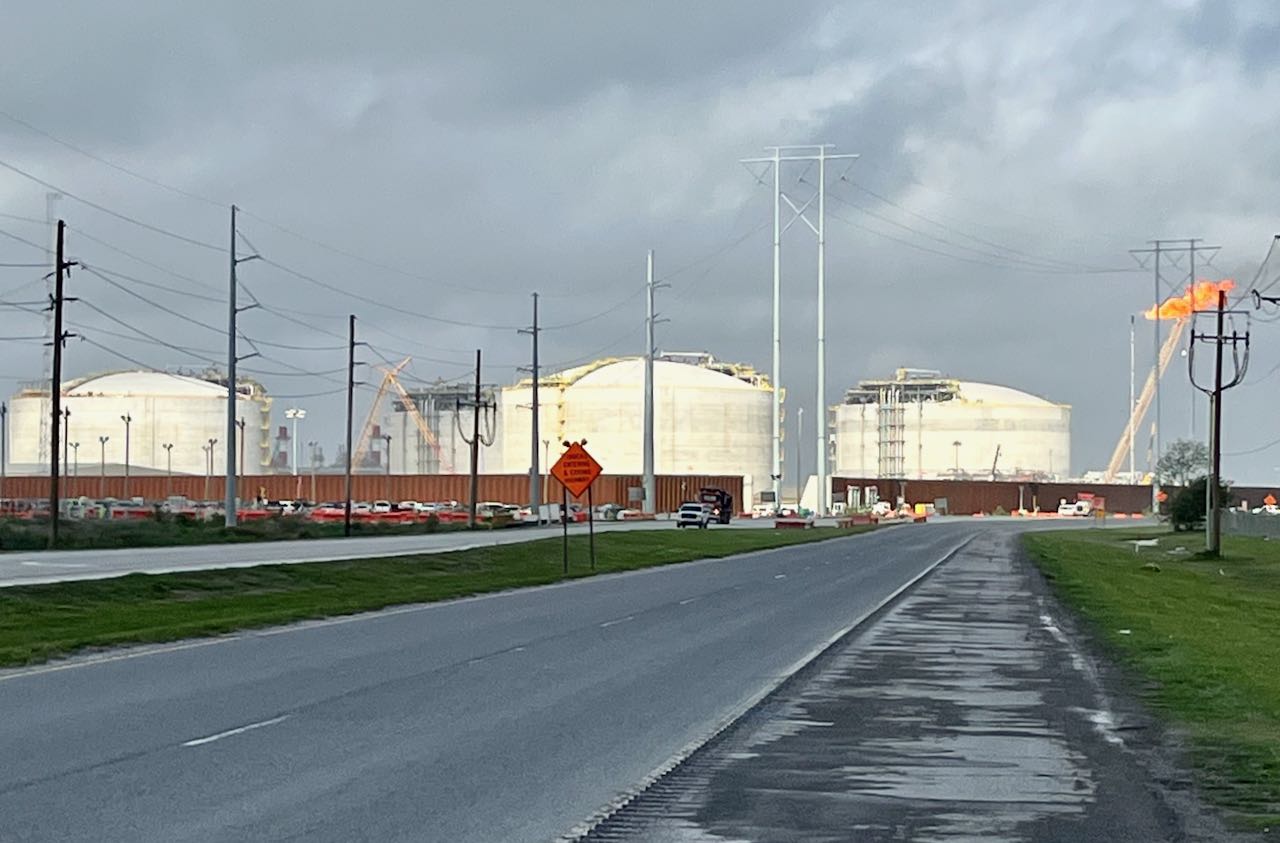
Gas was being flared off.

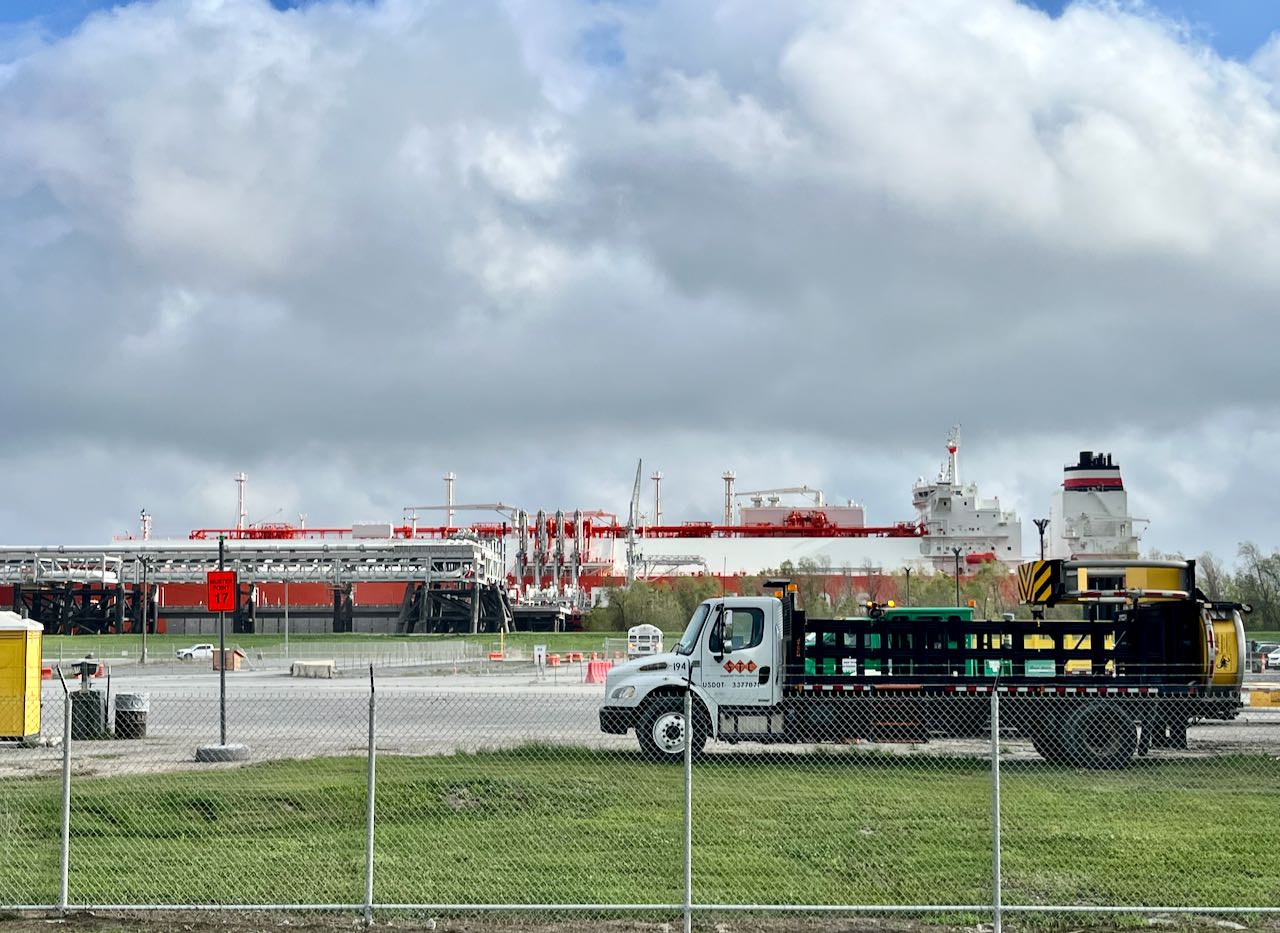
On the other side of the road, ships were being loaded, I assume, to far regions of the globe.
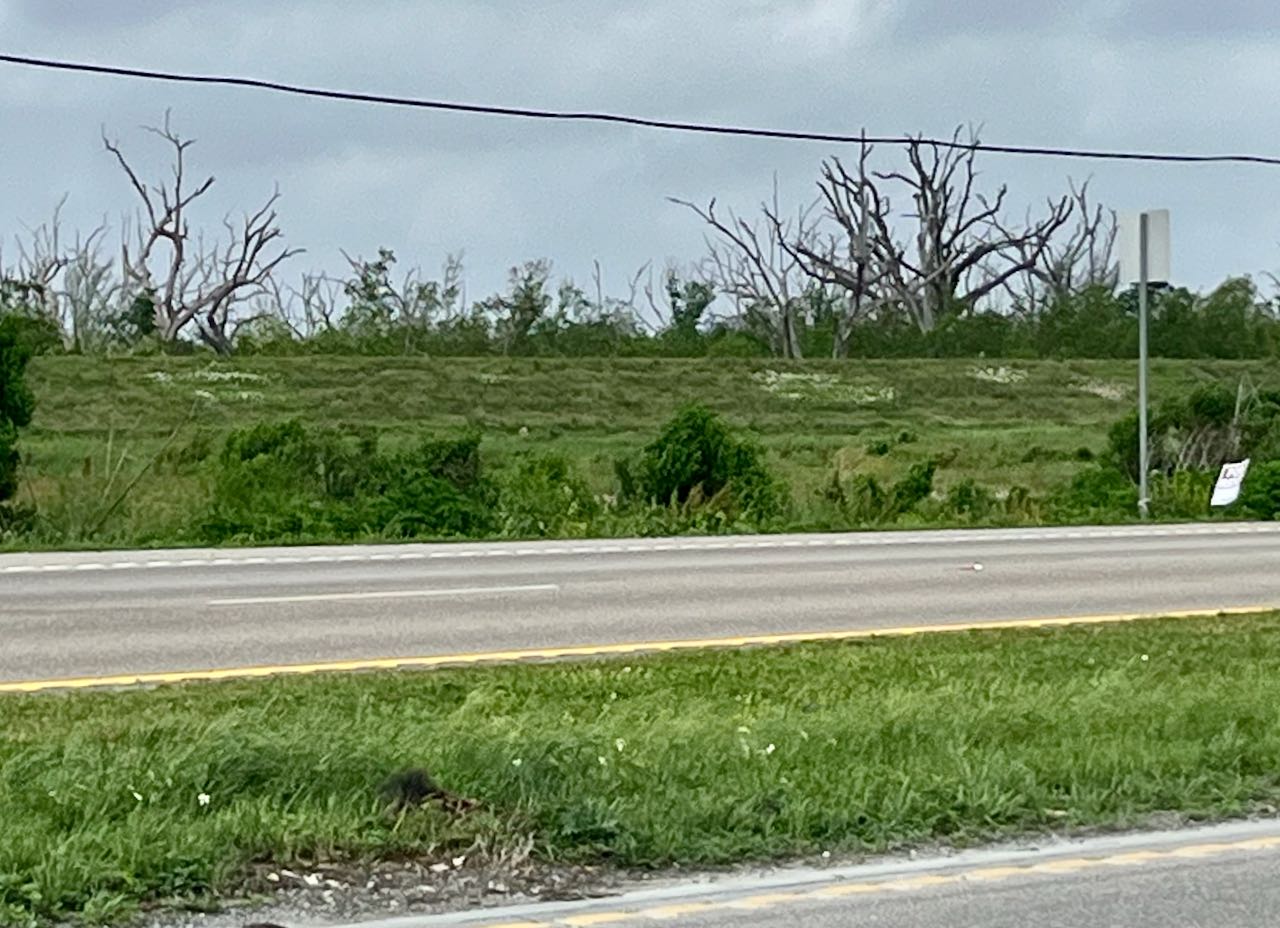
Cycling just north of the LNG facility across the highway was a small forest of trees killed from saltwater intrusion into the marshes.

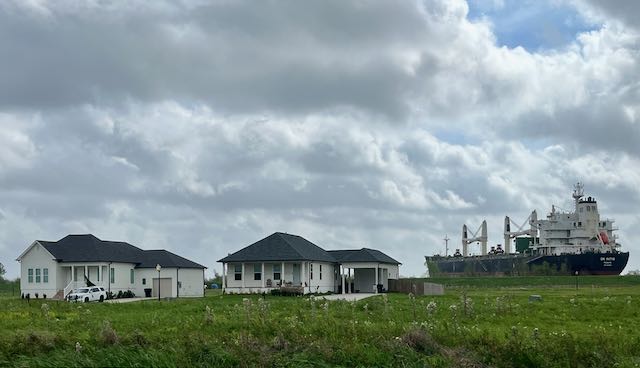
After more petrochemical plants there was civilization. This palatial newer riverfront house was dwarfed by a vessel sailing by.

I cycled by a small riverfront subdivision on the southern fringes of Belle Chasse LA. Ocean going ships were right out someone’s back door.

I was closing in on the end of my the seventy mile bike ride through Plaquemines Parish. About half of the parish’s 23,000 residents live in its northernmost corner, Belle Chasse, which is very much part of the New Orleans area, about twelve miles from the French Quarter but separated not only by the Mississippi River but also by the Intracoastal Waterway. Bicycling across the high Woodland Bridge over the Waterway was less threatening than I expected. There is not much traffic and it has a wide shoulder.

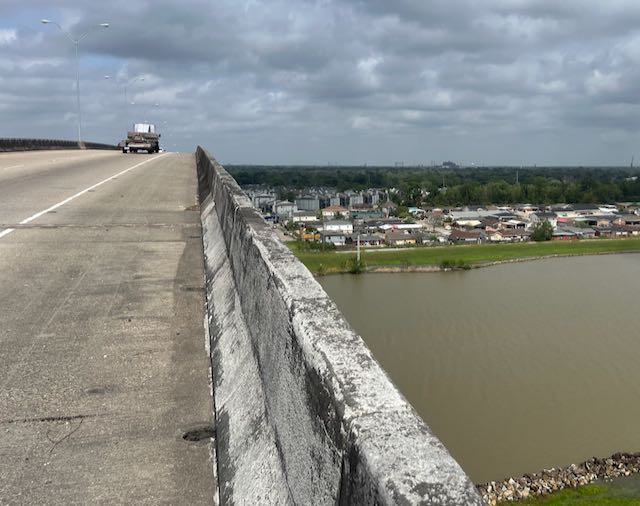
Once across the bridge it is only a few blocks through a residential neighborhood to the Algiers levee bike path which leads to the Algiers ferry.

Central New Orleans is just across the river.

I arrived home by two in the afternoon. I really enjoyed the two day ride and I had not felt unsafe. That feeling is problematic after thinking about the guy about my age killed out there in Plaquemines Parish only two days earlier. He must have been like me, wanting to achieve the geographic goal of “bicycling to the mouth of the Mississippi River.”
I am reminded that seeking such random goals can be pointless and obviously dangerous. Coastal areas in particular are rife with bridges and other choke points difficult to cross by bicycle. Car traffic gets funneled onto the same large highways. I will be more careful next time.


 urban bicycle journeys
Leave a reply to barbarasholl Cancel reply